


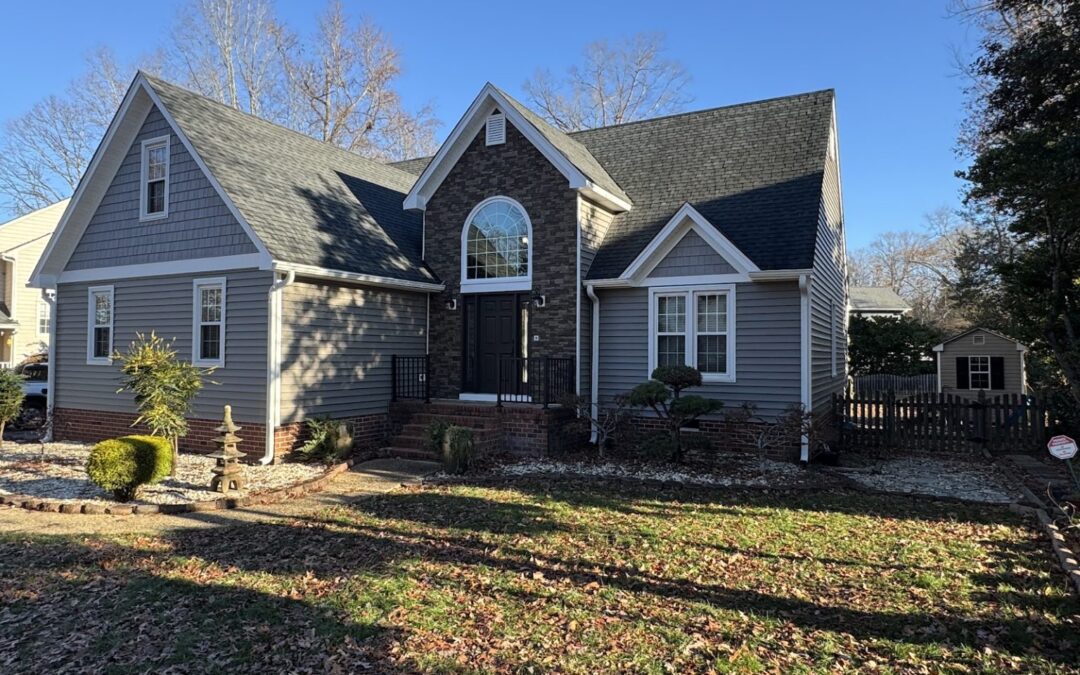
Siding Replacement in Richmond: What to Know Before You Start
Siding is the part of your house you look at every day without ever really seeing it. It fades a little at a time, a seam opens up behind the downspout, a couple of panels crack during a cold snap, and you figure you’ll deal with it in the spring. Then one afternoon you pull into the driveway, actually look at the place, and realize the exterior has quietly aged about fifteen years while you weren’t paying attention.
That’s usually when homeowners start calling around about siding replacement, and the first question is almost always some version of the same one: do I really need to replace all of it, or can somebody just fix the bad spots? It’s a fair thing to ask, and the answer isn’t automatically “replace everything.” Here’s how we look at it at JC Siding & Construction, and what the project actually involves once you’ve decided to go ahead.
Repair or Replace? How to Tell the Difference
Patching makes sense when the damage is contained, and the rest of the siding still has life in it. Maybe a branch came down on one section, a stray baseball cracked a few panels, or there’s a small patch of rot under a gutter that’s been overflowing for two years. These are things that are typically fixable with a repair.
Replacement starts making more sense when the trouble isn’t in one place anymore. Maybe the fading has gone from weathered to chalky residue on your hand, or you’re seeing warping on more than one wall, or the panels crack when the temperature drops. Soft spots you can press a thumb into are a bad sign anywhere they show up.
Two other things point to problems the siding is only hinting at. Paint peeling on interior walls, or energy bills creeping up without an obvious explanation, can both mean moisture is already getting in behind the panels. And if your house is still wearing its original siding after thirty or forty years, repairs start to feel like a game you can’t win, since you’re always chasing the next failure instead of getting ahead of it.
The practical tiebreaker is usually color. Matching new panels to siding that’s been sun-faded for two decades is hard even when the line is still made, and impossible once it’s discontinued, so a patch tends to announce itself from the curb. That said, our residential siding replacement services start with an actual inspection, because sometimes the honest answer is that you just need a repair.
What’s Behind Your Siding Matters More Than the Siding
Something most homeowners never hear is that siding isn’t waterproof and was never designed to be. It works as a rain screen, shedding the bulk of the water and absorbing the beating from sun and wind, while the real moisture defense sits behind it: the sheathing, a weather-resistive barrier like house wrap, and flashing that steers water away from windows, doors, and anywhere two surfaces meet. Those pieces work as a system, and when one fails, the rest usually fail with it.
The catch is that nobody gets a clear look at any of it until the siding comes off. Tear-off day is when you find the soft sheathing under a second-story window, or house wrap that was never lapped in the right direction, or carpenter ant damage behind a shrub nobody’s trimmed in a decade. That’s a big part of why a full replacement solves things a surface repair can’t touch, since you’re getting eyes on the envelope for the first time since the house was built. Build a little cushion into your budget for whatever turns up, and know that any contractor worth hiring quotes rot and sheathing repair at a known rate upfront instead of acting shocked when they find it.
Choosing Your Material at Replacement Time
Replacement is realistically your one chance to change materials, so it’s worth an actual conversation instead of defaulting to whatever happens to be on the house now.
Fiber cement, James Hardie being the name most people know, handles our humidity about as well as anything out there and shrugs off rot and insects. It costs more going in, and it’s heavier to work with, but plenty of Richmond homeowners love the look. Engineered wood like LP SmartSide gives you a warmer texture, it’s easier to handle on site, and it takes an impact well. Vinyl is still the value play, and if your mental image of it is the flimsy stuff from the nineties, modern CertainTeed products will surprise you. If comfort is part of why you’re doing this, ask about insulated vinyl, since it adds some thermal performance to walls that might not have any.
Your HOA rules, what the rest of the street looks like, and how long you plan to stay all pull on this decision too. We went deeper on the tradeoffs in our guide to home siding materials and styles if you want to compare before talking to anybody.
What a Siding Replacement Week Looks Like
Most siding replacement projects take somewhere between several days and a couple of weeks, and where you land depends on the size of the house, the material you picked, and how much repair work shows up once the old panels are off.
The crew sets up staging, protects your landscaping, then works one elevation at a time instead of stripping the whole house at once, which keeps things covered and lets them dry in each wall before moving on. Sheathing gets inspected and repaired where it needs it, house wrap goes up, flashing gets installed at every opening, and the new siding goes on with trim and corners to finish. From your side, expect noise, a dumpster, and people on ladders during the day, so sort out your parking and pull grills and patio furniture away from the walls beforehand.
What actually separates good work from bad work here is almost entirely stuff you’ll never see again once it’s covered: nailing that leaves the material room to expand and contract, correct overlap, and flashing done properly at every window and door. JC Siding has been doing this on Central Virginia homes since 2013, and that’s exactly where the experience shows up.
Why Windows and Trim Belong in the Same Conversation
Once the siding is off, your walls are open in a way they won’t be again for another twenty or thirty years, which makes it the natural time to deal with anything that ties into them. Windows are the big one, since replacing them while the wall is open means the flashing and weather barrier get integrated correctly around each opening instead of worked around after the fact. Trim, soffit, and fascia land in the same bucket.
There’s a money argument too, since the crew and staging are already there, and doing it together beats paying for mobilization twice. If your windows are original to the house, or you’ve noticed drafts and condensation between the panes, it’s worth pricing replacement windows alongside the siding instead of filing it away as a someday project.
What a Real Siding Estimate Should Include
A siding estimate should be detailed enough that you could hand it to a second contractor and get a bid you can actually compare against it. Look for the specific material and brand written out, square footage, what’s included for trim and accessories, a stated rate for rot repair if they find any, who’s pulling permits, and a realistic timeline. Warranty terms should cover the manufacturer’s product warranty and the contractor’s workmanship, both in writing.
If one bid comes in dramatically below the others, be curious about why before you get excited. Usually something’s been left out of the scope, and more often than not it’s the part behind the wall that you’d never notice until it causes a problem.
Ready to Take a Look at Your Siding?
Siding replacement is one of the rare projects that improves how your house looks, how it performs, and what it’s worth all at once, and it’s also one where the quality of the work stays invisible until something goes wrong years later. Which is the whole case for getting the inspection right at the start, picking a material you’ll still like in twenty years, and hiring people who take the house wrap and flashing as seriously as the panels.
If you’re around Richmond or Lynchburg and wondering whether your siding has another season in it, JC Siding & Construction would be glad to come take a look. Reach out for a free consultation, and we’ll give you a straight read on where things stand and an honest estimate.